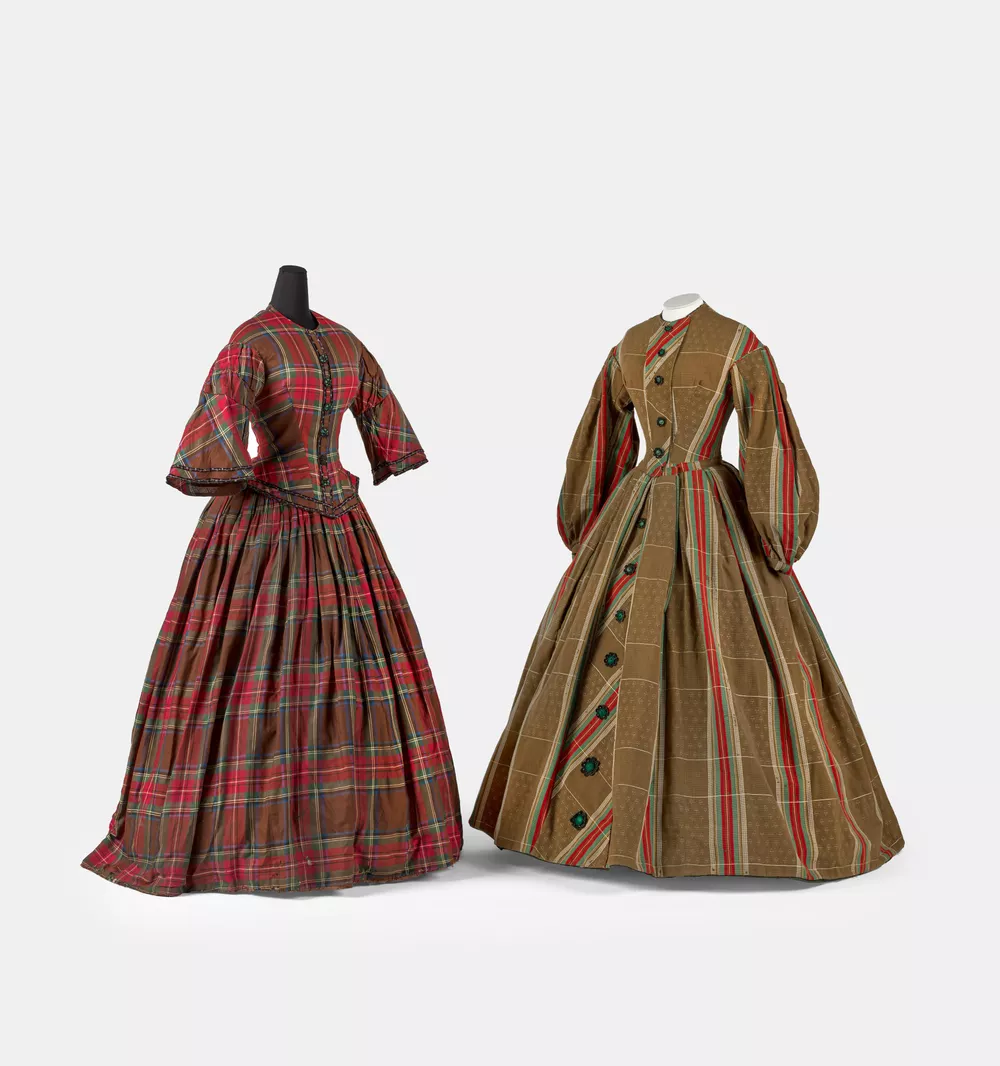
Dressed Up: Fashion & Photography 1850s to 1920s Education Resource
Through dress and photography, this exhibition explores how people constructed identity, communicated status, recorded family histories and responded to changing social expectations during a period of significant change. Students can investigate the stories embedded within objects and images while considering how contemporary forms of self-presentation compare with those of the past.
Throughout the resource key questions and overarching themes guide our suggested making and responding activities including;
- How do people shape the way they are seen?
- How do clothing and images communicate who we are?
- What can objects tell us about people's lives?
- How did photography transform the way people saw themselves?
- What do clothes reveal about social expectations?
- What can we learn from these garments and photographs about social life, technology and changing roles in the nineteenth and early twentieth centuries.
Fun Fact - Did you know?
AGSA started collecting historic dress in 1936, becoming the first state gallery in Australia to collect examples of historic fashion. In that year South Australians were commemorating the centenary of colonisation and were particularly interested in paying tribute to colonists and other emigrants who had lived in South Australia over the previous one hundred years.
- Select a garment or photograph on display in the exhibition. What details from the person’s clothing can you find that might tell you something about this person?
- Which elements seem designed to communicate status, wealth or personality?
- If you selected a photograph, what clues tell us about when this photograph was taken?
- Is a photograph always an accurate representation of a person?
- How do people ‘dress up’ today?
- What similarities exist between historical portrait photography and social media?
- What item of clothing would tell a story about your life?
- Which objects in your family help to preserve memories about your family’s history?
- How do you choose what to share about yourself through photographs?
Visual Arts: Foundation to Year 6
Responding
- Investigate how artists, photographers and designers communicate ideas about people and daily life.
- Describe how visual conventions are used to create meaning in portraits.
Making
- Create self-portraits inspired by historical photographs.
- Design clothing that communicates aspects of personal identity.
Visual Arts: Years 7 to 10
Responding
- Analyse how representation, symbolism and aesthetic choices shape meaning.
- Examine how photography and fashion reflect cultural values and social contexts.
Making
- Produce photographic portraits that explore identity.
- Create wearable-art concepts inspired by historical silhouettes and contemporary issues.
History: Years 3 to 6
- Investigate family histories through photographs and personal objects.
- Explore how daily life has changed over time.
History: Years 7 to 10
- Examine social life, technology and changing roles in the nineteenth and early twentieth centuries.
- Analyse primary sources including photographs and clothing as historical evidence.
English: Years 3 to 10
- Interpret visual texts and historical images.
- Develop inferential skills by constructing narratives from photographs and objects.
- Create imaginative and persuasive texts based on people represented in the exhibition.
Design and Technologies: Years 5 to 10
- Investigate how materials, techniques and design processes influence function and aesthetics.
- Explore sustainable fashion through comparisons between historical garment longevity and contemporary fast fashion.
HASS / Civics and Citizenship: Years 5 to 10
- Explore social class, gender expectations and changing opportunities in Australian society.
- Investigate how personal choices are influenced by broader social norms.